
Key Insights
The U.S. naval blockade on Iran, initiated on April 13, 2026, aims to intercept ships entering and leaving Iranian ports, impacting global shipping routes.
Iran has responded by imposing its own restrictions on the Strait of Hormuz, leading to halted or rerouted vessels and raising concerns over global energy supply chains.
Singapore, a key maritime hub, has emphasized the non-negotiable nature of ships' transit rights through international straits, highlighting the importance of navigational freedoms under international law.
AI Analysis
The current geopolitical tensions surrounding the Strait of Hormuz are likely to continue impacting global shipping and energy markets in the short te...
Market Outlook
Short-Term
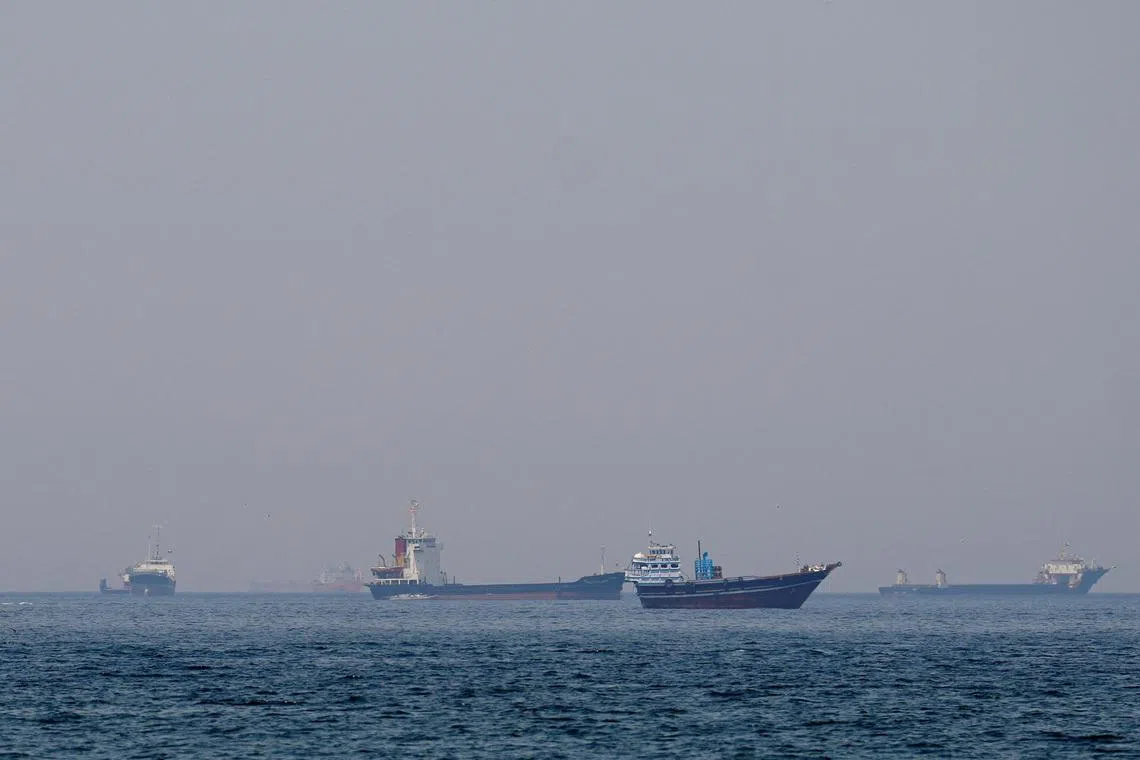
In the immediate term, the U.S. blockade and Iran's countermeasures have led to significant disruptions in shipping traffic through the Strait of Hormuz, with only a few vessels transiting the waterway. This has resulted in halted or rerouted vessels, raising concerns over global energy supply chains and international trade routes.
Long-Term
Recent News
Continue your research
Keep researching Singapore International Shipping Rights Hormuz Blockade
Move from the topic summary into related coverage, article-level impact analysis, and the next scheduled catalyst.
Explore market intelligence
Connect this story to current themes across macro, equities, commodities, and risk.
Follow AI financial news
Find related coverage ranked around the assets and market themes you follow.
Analyze a market story
Review sentiment, relevance, likely impact, timeframe, confidence, and uncertainty.
Prepare for market events
Check scheduled catalysts and create event-specific email reminders with optional AI context.
Unlock the full Singapore International Shipping Rights Hormuz Blockade analysis
Get AI-powered insights, alerts, and market analysis for Singapore International Shipping Rights Hormuz Blockade and other topics you follow.
No credit card required