
Key Insights
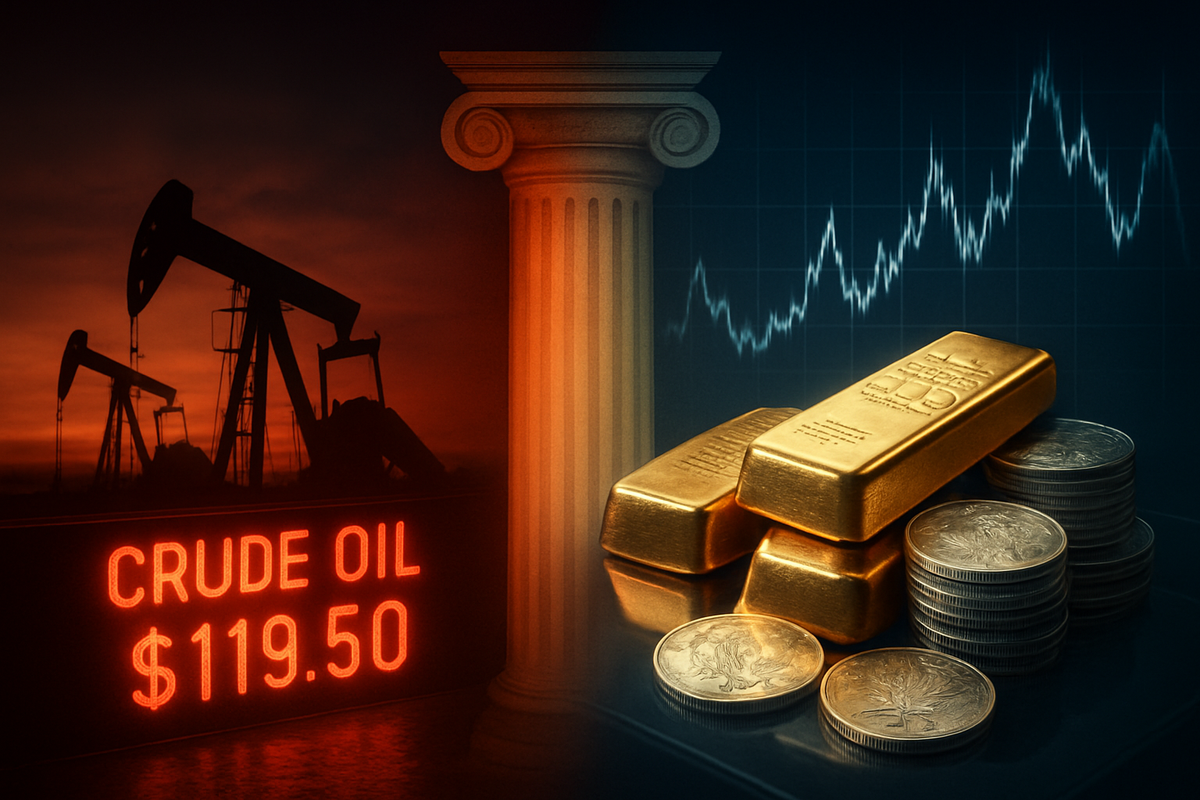
On March 19, 2026, gold prices fell by 5.9% to $4,600.70 per ounce, while silver dropped 8.2% to $70.902 per ounce, marking significant declines in a single day.
The surge in oil prices, driven by Middle East conflicts, has intensified inflation concerns, leading to expectations of prolonged higher interest rates from central banks.
The Federal Reserve's decision to maintain interest rates, despite rising energy costs, has diminished the appeal of non-yielding assets like gold and silver.
AI Analysis
The current bearish trend in gold and silver prices is likely to continue in the short term, driven by persistent inflation concerns and a strong U.S....
Market Outlook
Short-Term
In the short term, the precious metals market is expected to remain volatile, influenced by ongoing geopolitical tensions and fluctuating energy prices. Investors should monitor developments in the Middle East and central bank policies for potential market shifts.
Long-Term
Recent News

Continue your research
Keep researching Gold And Silver Price Decline Amid Energy Shocks
Move from the topic summary into related coverage, article-level impact analysis, and the next scheduled catalyst.
Explore market intelligence
Connect this story to current themes across macro, equities, commodities, and risk.
Follow AI financial news
Find related coverage ranked around the assets and market themes you follow.
Analyze a market story
Review sentiment, relevance, likely impact, timeframe, confidence, and uncertainty.
Prepare for market events
Check scheduled catalysts and create event-specific email reminders with optional AI context.
Unlock the full Gold And Silver Price Decline Amid Energy Shocks analysis
Get AI-powered insights, alerts, and market analysis for Gold And Silver Price Decline Amid Energy Shocks and other topics you follow.
No credit card required